I've been selling online since 2016. Today I run APEXX, an ecommerce business selling through Shopify and Amazon across several markets. When I hit a problem the existing software won't fix, I build my own.
Three months ago I couldn't have done that. Here's what changed, and how you could do the same.
None of them began as a product idea. They began as a spreadsheet nobody trusted, or a question nobody could answer.
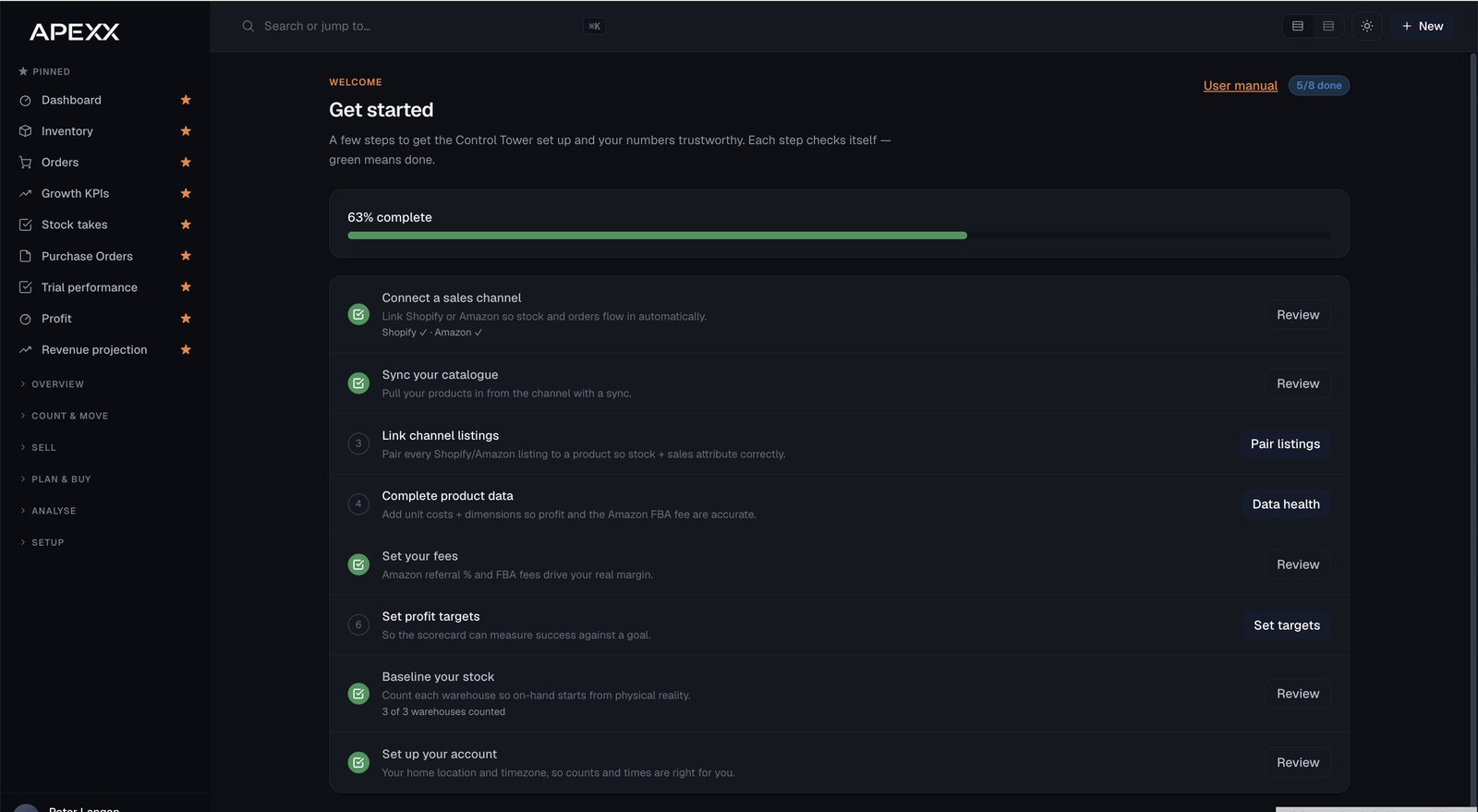
We sell in several countries across Shopify and Amazon, with stock in different places. Nobody could see the whole picture without opening four tabs and a spreadsheet.
One place for inventory by country, run rates, predicted stockouts, purchase orders, suppliers and what each order actually made.
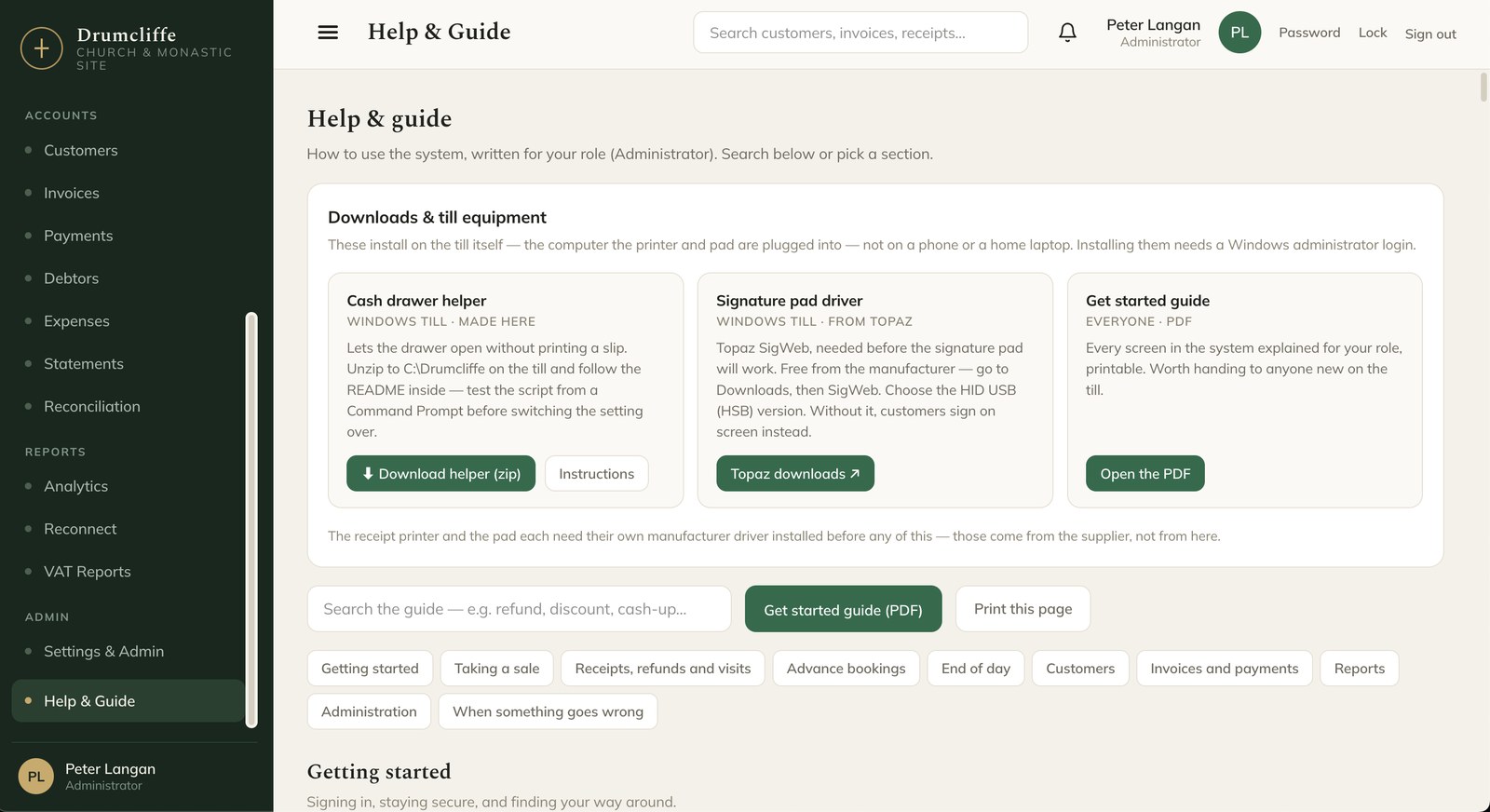
A tourism operation using an off-the-shelf till that didn't match how they actually worked.
Card, cash and account sales, customer accounts, coach groups, arrivals and invoicing, built around the real operation.

My wife writes children's books. She could sell them into shops, but had nowhere to sell them directly.
A shop for a single product: the book, the reviews, the stockists and checkout. It took about two hours.
Selling those same books into shops was the harder half. Which shop had what, what had sold, who owed money — it lived in her head and a spreadsheet.
Tracks deliveries, stock in each shop, invoicing, payments and when she last spoke to them.
My kids wanted YouTube. I didn't want the endless recommendations or the ads.
An Android TV app that plays only videos I've approved. It took about forty minutes and we use it every day.
That isn't false modesty. I could change a colour if someone showed me where it lived. Anything real meant hiring a developer, writing a spec, waiting, and paying for it. So most ideas never got built.
That changed. The tools got good enough that I can describe what I need and get something working back. I'm not going to pretend the code is perfect, but a working tool beats the spreadsheet it replaced, and I can keep improving it myself.
The change that actually mattered wasn't technical. When I run into a problem now, my first thought isn't who could build this. It's whether I could just build the fix.
Find a problem. Build the solution. Sell it. Get your first paying customer in less than 90 days, even if you've never coded before.
I never sat down to think of a product. The problems were already there — a spreadsheet three people edit and nobody trusts, an invoice run that eats somebody's Friday night, a question nobody can answer without opening four tabs.
Start with one real problem. Then check other people have the same one before you build anything. Once the same problem keeps showing up, it stops being a one-off and starts to look like a market — usually one too small for the big software companies to bother with.
That's the kind of software I want to help you build. Not the next huge app. Something ten people badly want.
Something repetitive, manual or awkward, in a business you already understand.
The smallest thing that genuinely fixes it. Not everything. The bit that matters.
Put it in front of the people with the problem, price it, and ask for the money.
I'll be honest about what this is. It's work. You'll have to talk to people, build something imperfect and ask someone to pay for it. I can show you the process and look at what you're building. I can't do those three parts for you.
$9 per month
Your $9 price is locked in for as long as you remain a member. After 50 members, the price goes up.
You probably don't need a new idea. You need a problem somebody wants gone.